Saturday, 1 November 2014
Task 6 -Creating a Montage
Hollywood Montage
Here is the film that my group had made in the style of a Hollywood montage.
The idea for this Hollywood montage is about three students day at school. It is two show three different emotions that you can feel with a typical school day. Those Emotions are sad, okay and happy. It also shows them enjoying their lunch break and break time with another friend before they rush off to enjoy their weekend after a long day of school
Soviet Montage
Here is the second film that my group made in the style of a Soviet Montage. The idea for this film was to make school look more like a prison then a place of education. It is also show what bulling actually feels like when you see three girls picking on a another girl then it shows lions attacking a animal. this type of film giving off a message to anyone who doesn't really understand the real feeling of feeling trapped and attacked.

Thursday, 16 October 2014
Task 5 - Understanding Montage Theory
Montage is know as a technique where you select, edit and piece together different film clips and then put them together to make a whole film.
Montage has three slightly different contexts:
The meaning of 'montage' in French simply means just editing the film.
The literal french meaning "Assembly".
Hollywood Cinema
Hollywood Cinema takes shots through out the whole day and then the editor will go and chose which parts are the best to keep for the filming. This can be seen in the movie "Rocky" as we go along through his day of training for a big boxing match that he has coming up. You can see that they have taken the good parts of Rocky's training so that we can see how hard working he is.
Early Soviet Filmmaking
With Soviet Montage, "montage" had a different meaning. The film makers started juxtaposing shots to create new meaning that did not exist in either shot alone. This is used for comparing two different things to reveal a hidden or deeper meaning. Lev Kuleshov was a young soviet film maker and did an experiment in 1920 where he took an old film clip of a head shot of a Russian actor and an inter-cut the shot with different images. By Putting the the picture of the actor and the dead child, the audience can see that the actor is sad then by putting him next to a picture of food the audience think he is hungry and then putting him next to a picture of a woman the audience think he is thinking of lust. If the picture of the actor was on his own, then the audience would not know what he was thinking about or what he was feeling.

In the 1925 film Strike! (Seget Eisenttein) Soviet filmmaking is used to reveal a hidden or deeper meaning such as the Russian troops were mistreating the strikers and this can be seen in the clips of the butchers slaughtering the cattle. The first two scenes seem unrelated until the Russian troops start killing the striking works, linking the butcher to the Russian troops and the works to the cattle that is being slaughtered by the butcher. This is telling the audience the striking workers were being killed like they were animals.
Montage has three slightly different contexts:
- French film montage
- Hollywood montage
- Early Soviet filmmaking
The meaning of 'montage' in French simply means just editing the film.
The literal french meaning "Assembly".
Hollywood Cinema
Hollywood Cinema takes shots through out the whole day and then the editor will go and chose which parts are the best to keep for the filming. This can be seen in the movie "Rocky" as we go along through his day of training for a big boxing match that he has coming up. You can see that they have taken the good parts of Rocky's training so that we can see how hard working he is.
Early Soviet Filmmaking
With Soviet Montage, "montage" had a different meaning. The film makers started juxtaposing shots to create new meaning that did not exist in either shot alone. This is used for comparing two different things to reveal a hidden or deeper meaning. Lev Kuleshov was a young soviet film maker and did an experiment in 1920 where he took an old film clip of a head shot of a Russian actor and an inter-cut the shot with different images. By Putting the the picture of the actor and the dead child, the audience can see that the actor is sad then by putting him next to a picture of food the audience think he is hungry and then putting him next to a picture of a woman the audience think he is thinking of lust. If the picture of the actor was on his own, then the audience would not know what he was thinking about or what he was feeling.

In the 1925 film Strike! (Seget Eisenttein) Soviet filmmaking is used to reveal a hidden or deeper meaning such as the Russian troops were mistreating the strikers and this can be seen in the clips of the butchers slaughtering the cattle. The first two scenes seem unrelated until the Russian troops start killing the striking works, linking the butcher to the Russian troops and the works to the cattle that is being slaughtered by the butcher. This is telling the audience the striking workers were being killed like they were animals.
Wednesday, 15 October 2014
Task 4 -From Analogue to Digital Editing
Analogue film and editing is (splicing)
Analogue editing is when you cut together pieces of Celluloid Film.
 At one point in film making, images were printed on to acetate negatives. Once that was done, they were then "spliced" (cut&stuck) together to form the reel of film. After the film was made, it would then be feed through a projector at a constant speed of 24 frames a second which then makes the pictures look like they are moving.
The Moviola
 Moviola was invented in the year 1924 and was invented by Iwan Serrurier. The Moviola was the first device that allowed directors to view the film they were making while it was being edited. This machine was used for feature length motion picture editing.
Video editing .
 Before digital technologies became available, magnetic tapes were used to store information-these are known as video tapes.
Video editing is the process of editing segments of these tapes using a device that mechanically put pieces of video tape together. The film has to be edited in the right order.
Digital Editing
Digital Media is a form of electronic media where data had been saved in digital form. Digital Editing is used on computers to order and manipulate this digital data. When it comes to Digital Editing, there are different programs such as: Adobe Premier, Avid and Final Cut Pro. Digital film making uses bits and bytes to record, transmit and reply images, instead of chemicals on film.
When it comes to digital editing, it is all electronically done so there is no need for printing or "splicing". This way of editing soon took over Video editing because of it being a quicker and cheaper way to edit. The best thing of this is that you can edit in any order.
NON-Linear editing is...
The pros and cons analogue and digital editing
There are pros and cons on both Analogue and Digital editing.
The Pros in Analogue editing is that Analogue editing is quicker and precise for people who are filming. it is also safer to film because theres less chance of the film getting damaged. On the other hand, the Cons to Analogue editing such as if you make a mistake, you can't change it or take a retake of the scene you shot. Also, in the time of Analogue editing, there was no CD's or VHS' so it would be more expensive to film and it would be harder to carry. Another con to Analogue is that you could not have any communication with the person behind the camera because you can't edit out people talking.
The Pros to Digital editing is that you can put clips together in any order with also means you can film in any order you like. The Cons to Digital editing is that it could be hard for people to use because it is more complex to understand and may struggle when it comes to editing. Also, Digital editing relies on technology, so you never know if the technology you will be using will work or not or it could break while being used.
Analogue editing is when you cut together pieces of Celluloid Film.
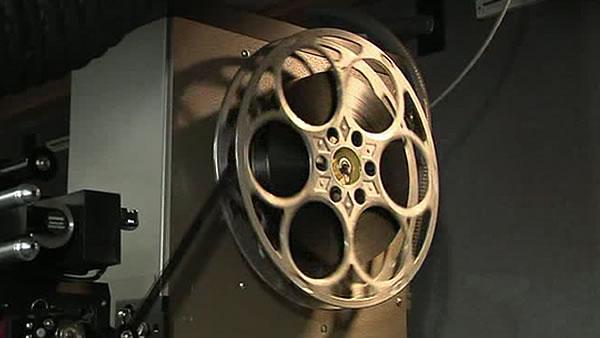 At one point in film making, images were printed on to acetate negatives. Once that was done, they were then "spliced" (cut&stuck) together to form the reel of film. After the film was made, it would then be feed through a projector at a constant speed of 24 frames a second which then makes the pictures look like they are moving.
The Moviola
Moviola was invented in the year 1924 and was invented by Iwan Serrurier. The Moviola was the first device that allowed directors to view the film they were making while it was being edited. This machine was used for feature length motion picture editing.Video editing .
 Before digital technologies became available, magnetic tapes were used to store information-these are known as video tapes.
Video editing is the process of editing segments of these tapes using a device that mechanically put pieces of video tape together. The film has to be edited in the right order.
Digital Editing
Digital Media is a form of electronic media where data had been saved in digital form. Digital Editing is used on computers to order and manipulate this digital data. When it comes to Digital Editing, there are different programs such as: Adobe Premier, Avid and Final Cut Pro. Digital film making uses bits and bytes to record, transmit and reply images, instead of chemicals on film.
When it comes to digital editing, it is all electronically done so there is no need for printing or "splicing". This way of editing soon took over Video editing because of it being a quicker and cheaper way to edit. The best thing of this is that you can edit in any order.
When you edit in any order, it is called Non-Linear editing. This means you can edit a sequence from the end before you even edit the first scene in the film. The whole progress uses a electronic files that makes cutting and pasting text into a word documents.
The pros and cons analogue and digital editing
There are pros and cons on both Analogue and Digital editing.
The Pros in Analogue editing is that Analogue editing is quicker and precise for people who are filming. it is also safer to film because theres less chance of the film getting damaged. On the other hand, the Cons to Analogue editing such as if you make a mistake, you can't change it or take a retake of the scene you shot. Also, in the time of Analogue editing, there was no CD's or VHS' so it would be more expensive to film and it would be harder to carry. Another con to Analogue is that you could not have any communication with the person behind the camera because you can't edit out people talking.
The Pros to Digital editing is that you can put clips together in any order with also means you can film in any order you like. The Cons to Digital editing is that it could be hard for people to use because it is more complex to understand and may struggle when it comes to editing. Also, Digital editing relies on technology, so you never know if the technology you will be using will work or not or it could break while being used.
Tuesday, 14 October 2014
Task 3 - Developing Editing Techniques
George Melies was the historical filmmaker who came across 'In-camera editing' completely by accident while as he was filming his film 'The Vanishing Lady' and his camera stopped working for a moment. In-camera editing is a technique of production, which the camera operator shoots the shots in the exact order of what the filmmaker wants his/her audience to see. In-Camera editing was used a great amount in the early days of film making before the use 'splicing' became a lot easier way to edit. The film that is being made is simply "edited" just by simply turning on and off the camera.
Pros and Cons of In-Camera Editing
PROS
Pros and Cons of In-Camera Editing
PROS
- It gives you time to change the setting of where you would like to film.
- It makes you think about the footage that you want to capture for the film you are making.
- It's less time consuming when it comes to editing
- It gives your actors more time to practice what they are going to do before you start filming
CONS
- If you end up making a mistake there is no way that you can change it.
- The use of communication
- The timing
- You can only take one clip and you have to stick with in. You can not change it.
There were a few cons in our work too. one of the cons was when we ended up filming two different clips in the wrong place so when you look at it, it looks very confusing. another Con is with the timing. As I was working on the camera I did not press the stop button on time at one point so the camera is on the actor longer then what it really needed to be.
Friday, 26 September 2014
Task 2 - In camera Editing
The shots that we used to make this video were:
- close up
- wide shot
- long shot
- high\low angle shots
The shot that I am least proud of is when the camera started to play up and then scene when there was meant to be a close up of Cara's face popped up at the wrong time, causing the end of the video to be kind of confusing to people who are watching it.
Wednesday, 17 September 2014
Task 1- Editing In Early Cinema
Some of the most basic films made in the early 50 years actually have a huge impact on the development in editing. I am going to take you on a small trip through time in editing in the Early Cinema days.
one of the first important people in the beginning of development in editing is Thomas Edison.
Thomas Edison ran a film laboratory that were the kinetographic camera and he invented the kinetoscope. Edison has also developed the 35mm film strip that soon became the industry standard. he soon then went on to develop the projector to play the film strip on.

We then go onto The Lumiere Brothers.
Thomas Edison worked with the Lumiere Brothers and produced short films that happened to be long, static and lock-down shot. The Lumiere Brothers motion in the shot was all that was necessary to amuse the audience. Theses were the first films to show people and bikes and animals moving on the big screen. This can actually be seen in the film "Sortie d'usine." made in the year 1895 by the Lumiere Brothers.

Sortie D'usine (1895)
The next person we are going to start looking at is G.A.Smith. At this point there was no story or editing in films so this means that films ran as long as film strips were in the camera. An Example of this can be seen in the film "The Miller and The Sweep". In the year 1899, G.A.smith made "The Kiss in The Tunnel". This film is said to be the beginning of narrative editing, also known as 'creating of a story'. Smith took advantage of the brief onset of darkness as they went into tunnel to splice (cut then stick two pieces of film together) in the shot of the couple. this is also known as "Phantom ride".

The Miller and The Sweep (1899)
The Kiss In The Tunnel (1899)
we then move onto George Melies.
George Melies was actually a magician who has seen the films that were made by the Lumiere Brothers. Melies saw this as a possibilities to make himself more noticeable to people. George Melies made a film called "The Vanishing Lady". This film was made in the year 1896 and he used the technique called 'In-Camera editing', BUT it has been rumored that he had discovered the art of stop motion purely by accident due to his camera broke down for a moment. Sadly though, he never worked out to move the camera to make close-ups or long shots which meant that his work was soon over looked by many which made the commercial world grow without him and it soon forced him out of business in the year 1913 and he sadly died in poverty and also alone.

The vanishing Lady (1896)
Now we go on to look at Edwin S. Porter.
Porter first worked as an electrician before he went on to join the film laboratory of Thomas Alva Edision in the Late 1890s. He and Edision worked together to make the first longer interesting films. The first longer film was 6 minutes long and was called "Life Of An Amrican Fireman" in the year 1903. This became the breakthrough film for Porter! This film was among the first that had a plot, action and even a close up! The close up was of a hand pulling a fire alarm. When then go onto Porter's ground breaking film "The Great Train Robbery" in 1903. This film is an excellent example of how early films began to resemble the types of films we see today. It also one of the first films to add a bit of colour use in it.

Life Of An American Fireman (1903)
The Great Train Robbery (1903)
Charles Parthe is the next person we move onto.
in Parthe first film 'The Horse That Bolted' in the year 1907, we see that he is the first to use an a example of a technique we now know as Parallel editing-cutting, which is when the camera splits into two different story lines. This is to show two story lines in the film. This is seen between the horse and the mail man. The first story line is the mail man, who is going around giving mail out to people then the second story line is the horse that up to no good and cursing trouble around town. Parallel editing-cutting is now used a lot is shows such as 'EastEnders' to show different story lines that is happening with a person in the show.

The Horse that Bolted (1907)
The last person we now go on to look at is D.W. Griffith.
Griffith was a U.S director and one of the early supporters of the power of editing. when watching his best remembered film 'The Birth Of A Nation' from the year 1915, we can see he used cross-cutting to show parallel action in different locations to show different parts of the war that he want us to see. Griffith was one of the first of all the early directors to actually use editing techniques in his film.

one of the first important people in the beginning of development in editing is Thomas Edison.
Thomas Edison ran a film laboratory that were the kinetographic camera and he invented the kinetoscope. Edison has also developed the 35mm film strip that soon became the industry standard. he soon then went on to develop the projector to play the film strip on.
We then go onto The Lumiere Brothers.
Thomas Edison worked with the Lumiere Brothers and produced short films that happened to be long, static and lock-down shot. The Lumiere Brothers motion in the shot was all that was necessary to amuse the audience. Theses were the first films to show people and bikes and animals moving on the big screen. This can actually be seen in the film "Sortie d'usine." made in the year 1895 by the Lumiere Brothers.
The next person we are going to start looking at is G.A.Smith. At this point there was no story or editing in films so this means that films ran as long as film strips were in the camera. An Example of this can be seen in the film "The Miller and The Sweep". In the year 1899, G.A.smith made "The Kiss in The Tunnel". This film is said to be the beginning of narrative editing, also known as 'creating of a story'. Smith took advantage of the brief onset of darkness as they went into tunnel to splice (cut then stick two pieces of film together) in the shot of the couple. this is also known as "Phantom ride".
we then move onto George Melies.
George Melies was actually a magician who has seen the films that were made by the Lumiere Brothers. Melies saw this as a possibilities to make himself more noticeable to people. George Melies made a film called "The Vanishing Lady". This film was made in the year 1896 and he used the technique called 'In-Camera editing', BUT it has been rumored that he had discovered the art of stop motion purely by accident due to his camera broke down for a moment. Sadly though, he never worked out to move the camera to make close-ups or long shots which meant that his work was soon over looked by many which made the commercial world grow without him and it soon forced him out of business in the year 1913 and he sadly died in poverty and also alone.
Now we go on to look at Edwin S. Porter.
Porter first worked as an electrician before he went on to join the film laboratory of Thomas Alva Edision in the Late 1890s. He and Edision worked together to make the first longer interesting films. The first longer film was 6 minutes long and was called "Life Of An Amrican Fireman" in the year 1903. This became the breakthrough film for Porter! This film was among the first that had a plot, action and even a close up! The close up was of a hand pulling a fire alarm. When then go onto Porter's ground breaking film "The Great Train Robbery" in 1903. This film is an excellent example of how early films began to resemble the types of films we see today. It also one of the first films to add a bit of colour use in it.
Charles Parthe is the next person we move onto.
in Parthe first film 'The Horse That Bolted' in the year 1907, we see that he is the first to use an a example of a technique we now know as Parallel editing-cutting, which is when the camera splits into two different story lines. This is to show two story lines in the film. This is seen between the horse and the mail man. The first story line is the mail man, who is going around giving mail out to people then the second story line is the horse that up to no good and cursing trouble around town. Parallel editing-cutting is now used a lot is shows such as 'EastEnders' to show different story lines that is happening with a person in the show.
The last person we now go on to look at is D.W. Griffith.
Griffith was a U.S director and one of the early supporters of the power of editing. when watching his best remembered film 'The Birth Of A Nation' from the year 1915, we can see he used cross-cutting to show parallel action in different locations to show different parts of the war that he want us to see. Griffith was one of the first of all the early directors to actually use editing techniques in his film.
The Birth Of A Nation (1915)
Subscribe to:
Posts (Atom)